Search


22 Apr 2026
Search
22 Apr 2026

Please allow ads as they help fund our trusted local news content.
Kindly add us to your ad blocker whitelist.
If you want further access to Ireland's best local journalism, consider contributing and/or subscribing to our free daily Newsletter .
Support our mission and join our community now.
To continue reading this article, you can subscribe for as little as €0.50 per week which will also give you access to all of our premium content and archived articles!
Alternatively, you can pay €0.50 per article, capped at €1 per day.
Thank you for supporting Ireland's best local journalism!


It was “rather dubious” whether an all-island court would lead to the conviction of more fugitives, according to Ireland’s attorney general in 1982.
Patrick Connolly SC, who would resign later that year after prolific murderer Malcolm McArthur was arrested in his apartment, made his assessment shortly after the new Irish government was formed.
The suggestion of a joint British-Irish court was discussed during the 1980s.
A meeting was held in April 1982, a month after Charles Haughey came to power for a second time and before his government collapsed in December of that year.
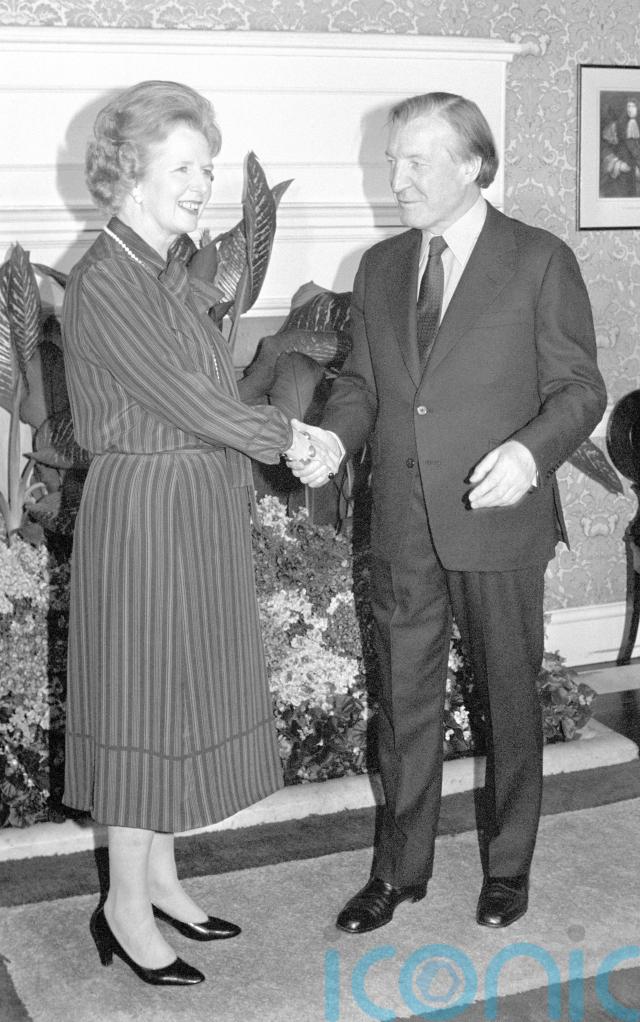
Mr Haughey, Mr Connolly, the minister for foreign affairs Gerry Collins, minister for justice Sean Doherty, and senior civil servants at several departments met to discuss matters relating to Northern Ireland.
In a document labelled “strictly confidential”, released this year as part of the National Archives in Dublin, Mr Connolly told the new Irish government that he was against the suggestion of an all-island court.
Mr Connolly, who was thrown into the spotlight in August after Malcolm McArthur was arrested in his Dublin apartment, said he did not believe the court would lead to the conviction of more fugitives.
He recounted a meeting his predecessor had with the British attorney general about extradition, joint interrogation and an “all-island court” and then gave his view, according to the memo.
“The attorney general was of the opinion that the proposal considered in this regard was a cumbersome arrangement, the merits of which in terms of securing more convictions of fugitive offenders were, in his view, rather dubious.
“There were particular difficulties as regards the question of whether a right of appeal would lie.”
In relation to joint interrogation, he said that gardai feared attacks would be mounted at Garda stations if RUC officers could be present and Mr Haughey said that extradition was an “explosive issue”.
In January of that year, before the general election was called, a meeting was held at Iveagh House attended by taoiseach Garret FitzGerald, the ministers for justice and foreign affairs, and then attorney general Peter Sutherland SC.
The note from that meeting stated that talks had begun between the British and Irish attorneys general and since then, “there was pressure from the British side for us to advance our position on extradition and joint questioning”.
It also noted that there was “no prospect” of the British agreeing to a joint court without movement on joint questioning or extradition.
“Questions arose about such a court’s jurisdiction and rules of procedure,” the note stated.
“There seemed to be agreement that the court could sit in the north and the south as necessary.
“If a case were initiated in the north, the court would deal with it under UK law and procedures, even if it was necessary to sit in the south.
“It was questioned as to whether such a formula could work in practice and further clarification of the position was felt to be necessary.”
It also noted that while there was uniformity of legislation, rules of evidence differed which was relevant to admissions of guilt and could be an “enormous obstacle”.
“It was agreed that the term ‘all-island court’ was politically sensitive and that a more appropriate title might be ‘joint court’.”
– This article is based on documents contained in the file labelled 2025/125/294 in the National Archives of Ireland.

Subscribe or register today to discover more from DonegalLive.ie
Buy the e-paper of the Donegal Democrat, Donegal People's Press, Donegal Post and Inish Times here for instant access to Donegal's premier news titles.
Keep up with the latest news from Donegal with our daily newsletter featuring the most important stories of the day delivered to your inbox every evening at 5pm.

This publication supports the work of the Press Council of Ireland and Office of the Press Ombudsman, and our staff operate within the Code of Practice of the Press Council. You can obtain a copy of the Code, or contact the Council, at www.presscouncil.ie, Lo-call 1800 208 080 or email: info@presscouncil.ie.