Search


25 Apr 2026
Search
25 Apr 2026

Please allow ads as they help fund our trusted local news content.
Kindly add us to your ad blocker whitelist.
If you want further access to Ireland's best local journalism, consider contributing and/or subscribing to our free daily Newsletter .
Support our mission and join our community now.
To continue reading this article, you can subscribe for as little as €0.50 per week which will also give you access to all of our premium content and archived articles!
Alternatively, you can pay €0.50 per article, capped at €1 per day.
Thank you for supporting Ireland's best local journalism!


Opposition parties have criticised reductions in the tenant-in-situ scheme for driving a new record number of people accessing emergency homeless accommodation.
The number of people using emergency accommodation rose to 17,517 in the last full week of March, an increase from 17,308 the previous month.
The total is made up of 11,946 adults and 5,571 children, both at record levels.
The monthly figures published by the Department of Housing do not account for people sleeping rough or those staying in hospitals, asylum centres or domestic violence shelters.
Tanaiste Simon Harris said “homelessness in Ireland is far too high” and added that child homelessness “is something that cannot be accepted”.
Mr Harris said Government is seeking updates from all local authorities on how they intend to have “greater correlation” between more social housing and decreasing child and family homelessness.
“We are providing more social homes than we have at any time in my life, and yet we’re not yet seeing the benefit of that.”

Asked about the comments, Labour housing spokesman Conor Sheehan said it was the “oldest trick in the book” for ministers to “swing it back on local authorities”.
He said “this is a failure of government policy” and said the Government had exposed tenants to “astronomical rent increases” with recent reforms, and cut second-hand acquisitions.
“I think that homelessness is going to continue – depressingly – to rise and unfortunately, the homeless figures have become almost like wallpaper for the Government. They are just not affected by it.”
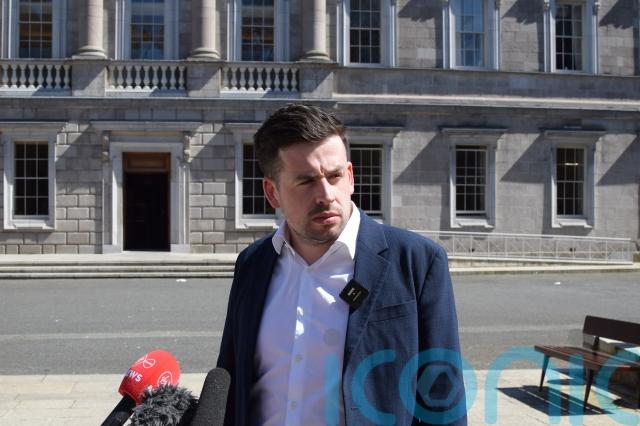
Sinn Fein’s housing spokesman accused Mr Harris of “insulting people’s intelligence” as he also said “cuts to vital homeless prevention schemes are pushing more and more families into homelessness”.
Eoin O Broin said homelessness was driven by eviction notices as landlords exit the private rental sector and insufficient social and affordable homes.
Mr O Broin also said Minister for Housing James Browne had slashed funding for schemes such as tenant-in-situ.
He said: “Data provided to me by local authorities shows a 66% reduction in the number of social housing acquisitions in 2025 compared to 2024 and a 69% reduction in tenant-in-situ acquisitions.
“However, when we look at the impact on homeless prevention schemes like tenant-in-situ, in the cities, the cut has been even more dramatic. Dublin City and Fingal down 73%, Cork City down 65%, Galway City down 73%, Waterford down 70% and Dun Laoghaire-Rathdown down 95%.”
Mr O Broin said this meant hundreds of homes that could have been bought to prevent families becoming homeless were not purchased.

Social Democrats housing spokesman Rory Hearne said he had been contacted by a mother-of-two who is being evicted from her home after seven years and cannot go into emergency accommodation as one of her children has a disability.
“This family is not even counted in these figures.
“So what we have is record homelessness figures and record hidden homelessness figures as well.”
Mr Hearne also criticised cuts to the tenant-in-situ scheme and said the new rental reforms had incentivises landlords to evict people.
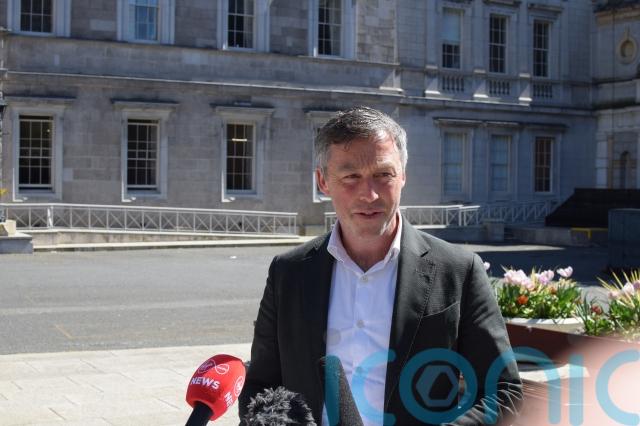
There has been a 46% increase in the overall figure since the lifting of the ban on no-fault evictions three years ago, when it was at 11,988 just before the pandemic-era measure was scrapped in April 2023.
All three opposition spokesmen called for a reintroduction of a no-fault eviction ban, with Mr O Broin stating it had to be combined with increased delivery of social and affordable homes.
Meanwhile, Focus Ireland launched its strategy for the remainder of the decade which includes a plan to acquire or construct 1,000 additional homes over the next five years.
The charity’s chief executive Pat Dennigan said: “Homelessness has more than doubled since our last strategy began in early 2021, and it is now vital that Government shows far greater urgency in easing this human crisis.”
The latest figures are the first snapshot of the pressure on homeless services after the Government’s rental reforms on six-year tenancies came into effect at the start of March.
The government has said the changes will provide greater security for renters and boost supply while the opposition has said it will dramatically increase rent costs by thousands a year and lead to increased homelessness through evictions.
Large landlords, defined as having four or more tenancies, are banned from carrying out no-fault evictions for tenancies beginning from March.
A small landlord can end tenancies through a no-fault eviction in limited circumstances, such as economic hardship or to move a family member in but, if they do that, they cannot reset the rent until the six-year window ends.

Subscribe or register today to discover more from DonegalLive.ie
Buy the e-paper of the Donegal Democrat, Donegal People's Press, Donegal Post and Inish Times here for instant access to Donegal's premier news titles.
Keep up with the latest news from Donegal with our daily newsletter featuring the most important stories of the day delivered to your inbox every evening at 5pm.

This publication supports the work of the Press Council of Ireland and Office of the Press Ombudsman, and our staff operate within the Code of Practice of the Press Council. You can obtain a copy of the Code, or contact the Council, at www.presscouncil.ie, Lo-call 1800 208 080 or email: info@presscouncil.ie.