
Majority of Irish people would back a united Ireland in a referendum, new poll reveals


A new poll has revealed a large majority of voters would back a united Ireland in a referendum.
The Ipsos MRBI study for the Irish Times showed that 62% of voters would support Irish unity, with 16% opposed – 13% said they do not know, while 8% said they would not vote.
Most voters said they would like to see a vote issue take place “in the next 10 years”, at 42%.
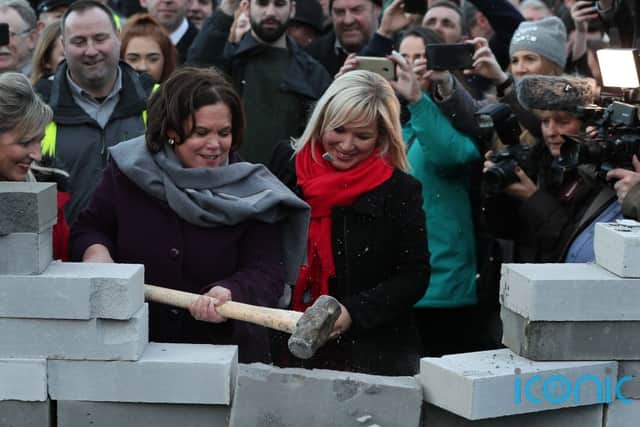
Sinn Fein leader Mary Lou McDonald and deputy leader Michelle O’Neill knock down a symbolic wall that was built as part of an anti-Brexit rally at the Irish border near Carrickcarnan, Co Louth
However, a majority said that while they support Irish unity in principle, it is not a priority issue for them.
Some 52% said a constitutional poll was “not very important, but I would like to see it some day”, compared with 20% who said it was “very important, it is a priority for me”.
Almost a quarter, 24%, said it was “not at all important”.
Voters also appear reluctant to make changes to national symbols that might accommodate the Unionist population in a new Ireland.
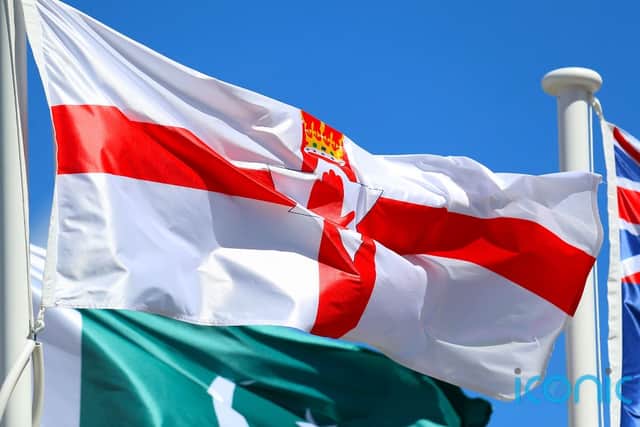
The flag of Northern Ireland on a pole at the Commonwealth Games.
People are also unwilling to bear the financial burden that could come with unity, with 79% saying they would “not accept” higher taxes, while another 79% said they were opposed if it meant less money to spend on public services.
But most people said they would accept having closer ties with the UK, with 47% in favour and 42% opposed.
A slim majority also backed having Unionist politicians as part of Government in Dublin, with 44% saying they would accept it, compared with 42% who opposed it.
People aged 25 to 34 are the biggest supporters of a united Ireland, at 67%, closely followed by the over 65s, on 66%.
People aged 18 to 24 and 50 to 64 are least likely to support the move, but a majority would still back it, with 57% of voters in each cohort in favour.
Fine Gael voters are most likely to oppose the move, with 25% of people who gave them a first preference vote saying they would opt for Northern Ireland to remain part of the United Kingdom, and 31% saying the issue was “not at all important”.
Unsurprisingly, Sinn Fein voters are most in favour, with 78% backing unity in a referendum and 36% saying the issue is “very important, it is a priority for me”.
The study found that 8% of Sinn Fein voters would opt for Northern Ireland to remain in the UK in a border poll.
The survey was conducted in the Republic of Ireland among a national quota sample of 1,200 people between December 5 and 8, among people over 18 and throughout every constituency.