
Low number of successful female applicants raises concerns about Irish Defence Forces recruitment
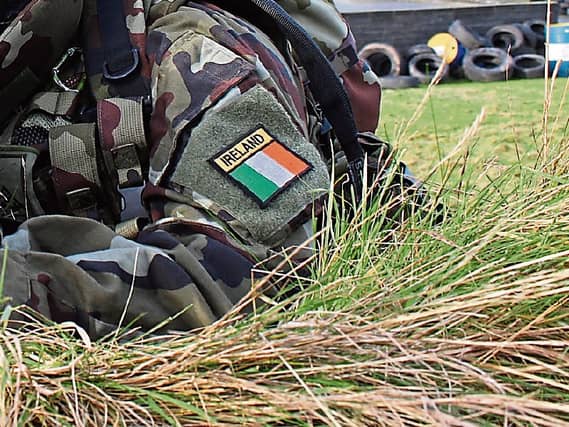

IN A PARLIAMENTARY session, Violet-Anne Wynne TD has raised concerns over the stark underrepresentation of women in the Irish Defence Forces, as only seven out of 617 applicants were accepted.
The Tánaiste and Minister for Defence addressed this issue, shedding light on the factors contributing to the low number of successful female applicants.
As of May 31, 2023, the Irish Defence Forces admitted just seven women into their ranks, a number that has sparked criticism due to the overwhelming number of applications received. Of the 617 applications submitted, 552 were deemed viable, but the acceptance rate for women remained notably low. This data was revealed in response to a parliamentary question, prompting the Tánaiste and Minister for Defence to elaborate on the circumstances surrounding this discrepancy.
The Minister disclosed that of the 617 viable applications, 63 are currently in progress, indicating a possible increase in the number of successful female recruits. Additionally, eight applicants withdrew their applications, further affecting the final count. The Minister provided a detailed breakdown of the reasons behind the rejection of the remaining 480 applications:
- Did not attend Psychometric Testing: 246 applicants
- Failed Psychometric Test / Verification: 151 applicants
- Did not attend Fitness Test and Interview: 45 applicants
- Failed Medical / Fitness Test: 15 applicants
- Duplicate Application: 1 applicant
- Does not meet Criteria / Educational Requirements: 9 applicants
- Unsuccessful as Outside of the Order of Merit for Cadet Competition: 12 applicants
- No Contact After Multiple Attempts: 1 applicant
The most glaring reasons for the decreasing rate among female applicants included a significant percentage that did not attend various stages of the induction process or failed essential assessments such as psychometric, fitness, or medical tests.
To mitigate non-attendance issues, the Defence Forces have made efforts to reschedule these stages according to the availability of the applicants.
In response, and while acknowledging the concerning pattern, the military authorities affirmed their commitment to an ongoing review of psychometric testing and other recruitment aspects to ensure their effectiveness in assessing suitability for entry into the Defence Forces.
In an effort to address the imbalance, psychometric testing within the Naval Service General Service recruitment has been temporarily suspended as part of a six-month pilot program. This approach is intended to provide insight into potential improvements for future decisions on the recruitment process.
The Irish government are said to have taken steps to address the underrepresentation of women in the Defence Forces. A High Level Action Plan, formed as a result of recommendations from the Commission on the Defence Forces, is geared towards increasing female participation.