
Data centre energy use questioned amid AI summit
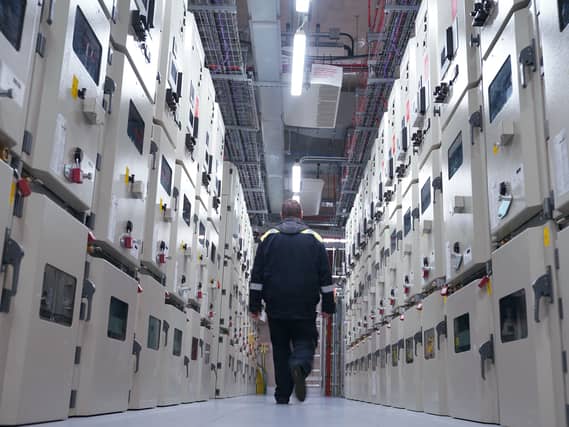

The EU will need to triple its data centre capacity in the next five to seven years, the bloc’s tech chief has said.
The EU will need to triple its data centre capacity in the next five to seven years, the bloc’s tech chief has said, as energy use by the facilities comes under scrutiny.
Ireland is hosting a major summit on artificial intelligence on Wednesday as part of its presidency of the Council of the European Union.
Data centre critics protested against the event, saying that “energy vampires and job robbers are not welcome”. It coincides with a nationwide strike of public sector workers over a dispute on a pay deal.
Speaking to reporters at the start of the conference, the EU’s tech chief said it was important that the bloc accelerates AI infrastructure investment.
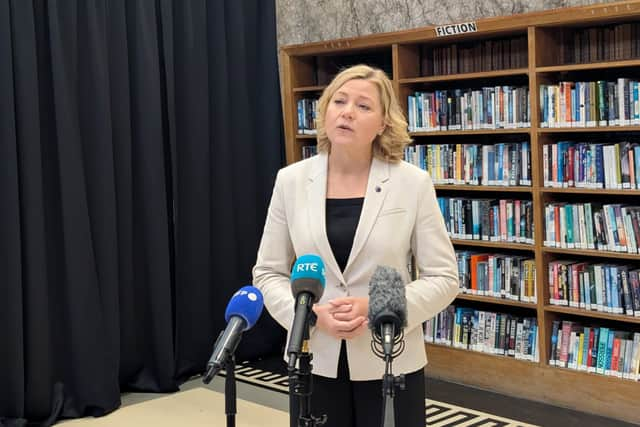
European Commission vice president with responsibility for tech sovereignty Henna Virkkunen said: “We know that we don’t have enough of the infrastructure which is needed to deploy AI and to be strong in this sector.
“So we have estimated that, for example, we have to triple our data centre capacity in five to seven years’ time, and in the same time, we know that our citizens want that we are investing in a sustainable manner, and that’s why we are looking – with the data centres also – for the best, most energy-efficient systems that we can use that people can trust.”
She added: “We are now supporting our member states to build also AI factories, and we have now an open call for gigafactories that we should have even more powerful supercomputers in the coming years and months than we have today.”
The Government is billing the event as “one of the most significant gatherings of AI leaders and policymakers held in Europe this year”.
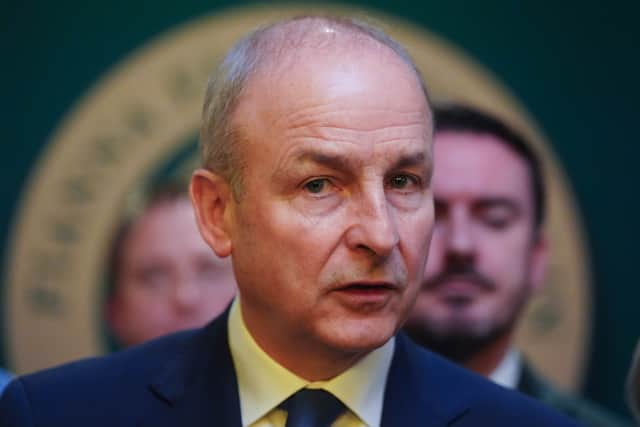
Opening the conference, Taoiseach Micheál Martin said: “As a Government, we have made long-term commitments to energy and infrastructure investment, and to an enterprise-focused model that will ensure competitiveness, adaptability and productivity are enhanced.”
Earlier in the week, Further Education Minister James Lawless told reporters Government was ensuring data centres were delivering renewable energy to match their consumption – in a comment questioned by the opposition.
Mr Lawless said said there was “concern” about energy use of data centres but said the state strategy says that the large energy users “must include a plan to create and generate the same degree of energy from renewable sources as to consume from its centres”.
He added: “If you are setting up a new data centre today, it is mandated on you that you supply your renewable energy to at least the same degree, either on site or elsewhere.”
However, opposition politicians have said Government policy argued that the Government’s connection policy for large energy users states that data centres actually have years to meet 80% of their electricity needs through renewable energy.
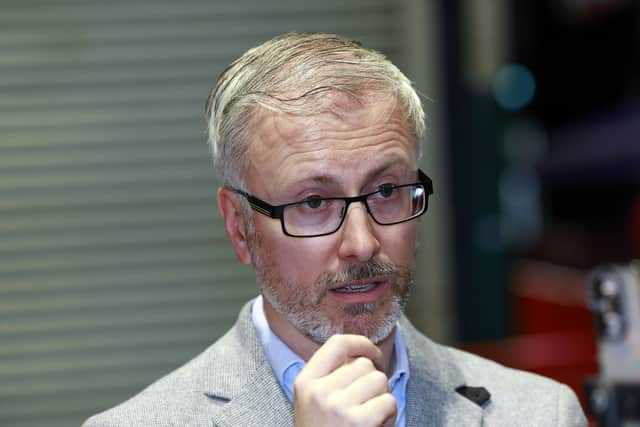
Green Party leader Roderic O’Gorman said: “There are three key problems with this.
“Firstly, the 80% requirement only applies in five years’ time – that’s a long time in which they can be powered by fossil fuels.
“Secondly, it will mean that when new wind or solar power is brought online, data centres will be out trying to buy it up, rather than letting is replace existing gas or oil electricity generation on our system.
He added: “So new renewables won’t be replacing carbon intensive electricity production, they will just sit alongside it.
“Finally, because data centres will still be allowed to use 20% of fossil fuel-generated electricity, and we know the number of data centres are likely to grow hugely in the next few years, this will still mean a big increase in the amount of carbon emissions in Ireland, caused by data centres.”

Sinn Féin MEP Lynn Boylan pointed to a Climate Change Advisory Council report which stated that there was a “well-established trend of data centres cannibalising any increase in Irish renewable capacity” and said: “The renewable energy we build should be replacing fossil fuels so that people’s bills come down as well as our emissions.
“Instead, Government’s plan is to funnel all our renewables into data centres.”
She likened letting data centres connect before delivering renewables to “buying a pig in a poke” and said communities will not see the benefit in bills.
The AI summit includes contributions from Microsoft president Brad Smith, Google DeepMind chief scientist Sir Demis Hassabis, OpenAI chief financial officer Sarah Friar, and Stripe vice chairwoman Eileen O’Mara.
Organisations such as Amazon, Anthropic, AMD, Intel and Nvidia are also represented.
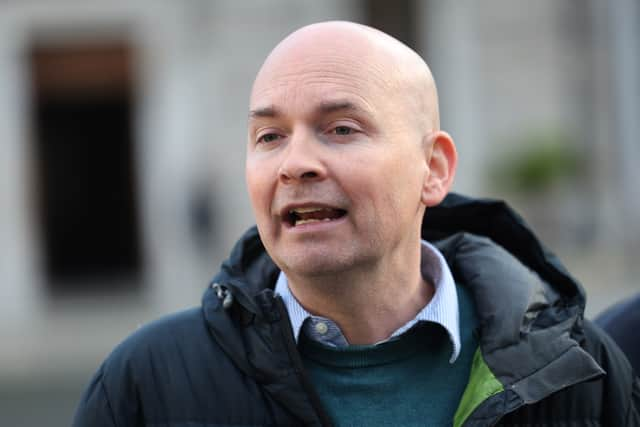
Data centre representative body Cloud Infrastructure Ireland said it recognises that the growth of digital infrastructure must be managed “responsibly and in a way that supports Ireland’s climate and energy objectives”.
It said that the 80% requirement is “a minimum requirement, not a ceiling” and added that the remaining 20% “should not be interpreted as an allocation for fossil-fuel use”.
It said: Crucially, the additionality requirement means qualifying data centres cannot simply absorb renewable generation already committed through State support schemes. They must help bring forward new renewable projects.
“Done correctly, this can increase Ireland’s overall renewable capacity rather than diverting the existing supply from households or displacing progress on fossil-fuel replacement.”
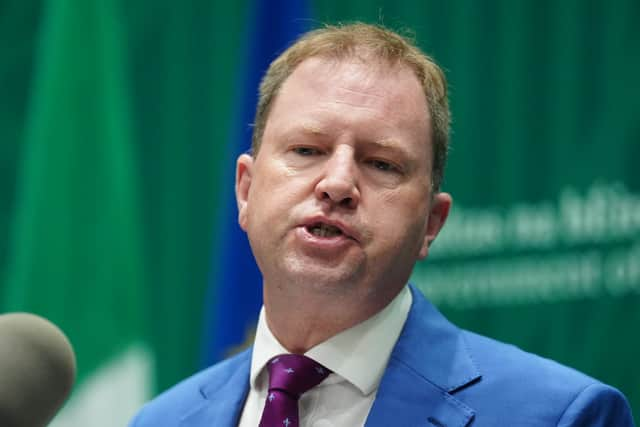
Ahead of the protest outside the RDS, People Before Profit TD Paul Murphy described data centres as “the toxic waste of the 21st century”.
He said: “They consume almost a quarter of our electricity, paying just half the electricity rate that households must pay, and driving up electricity prices for everybody else.
“They are consuming increasing volumes of our water and making it impossible to meet our climate targets.
“This is the inevitable outcome of a Government that puts itself at the service of Big Tech regardless of the consequences for the rest of society.”
Enterprise Minister Peter Burke said Ireland “won’t see a capacity to increase 3x over a short period of time”, but said there was a need for a “managed sustainable approach” to attracting investment.
Asked how Government ensured the renewable energy is delivered upon, Mr Burke said large energy users enter into “contractual arrangements” which help finance projects such as offshore wind.