
Congested emergency departments a key concern this winter – HSE chief


The HSE’s interim chief executive has warned of pressures on hospitals ahead of the busy winter period, with attendances to emergency departments up 5% compared with 2019.
The health service’s chief operations officer admitted that he was concerned for patient safety amid a shortage of staff as healthcare services experience high demand.
“The pressure on services is significant,” Stephen Mulvany said speaking at Dr Steevens’ Hospital in Dublin.
“A key challenge right now for the health service is the consistent and sustained increase of emergency attendance admissions to our acute hospitals, and the congestion that is causing in our emergency departments.”
More than a million people have attended emergency departments (EDs) so far this year, many of them frail, elderly people with very complex healthcare needs, he said.
There has been a 13% increase in ED admissions of people aged over 75 years, which was of particular concern and will be a focus of the HSE’s winter plan.
The HSE’s chief clinical officer Colm Henry said he was “of course” worried about patient safety in hospitals during busy periods and staff shortages.
“Of course I’m worried about patient safety and of the impact of congested emergency departments primarily because of the discomfort it causes to patients but also to their welfare and to their outcomes.
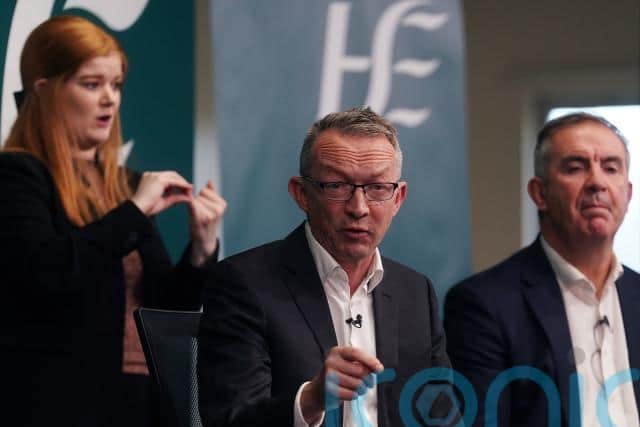
“I’d love to give reassurance… that everything is going to get better overnight, but it’s not.
“This is tough, and we’re competing in an international market for very good, highly-qualified graduates in medicine and nursing and social-care professions that can travel, and do travel.
“And after two or three years of Covid where people weren’t able to travel and work abroad, and many are making the choice to go abroad now. We want to keep them here, we want them to work safely.”
Mr Mulvany encouraged people to consider all urgent care options as the pressure on the health service grows, and suggested people use the 12 injury units across the country, out-of-hour GPs and pharmacists.
Damien McCallion, chief operations officer at the HSE, said that the 30,120 attendances to EDs last week was the highest on record for the year.
The number of people waiting on trollies in hospitals, a common gauge of how busy hospitals are, is lower than in 2019, with 408 people on trolleys on Thursday morning compared with 448 in 2019.
Mr McCallion said they are looking at ways to “enhance” community care, as well as emphasise injury units and out-of-hour GPs.
“Some of our sites are under sustained pressure, (with) a lot of improvement work going on to try and make sure we’re working as optimally as we can, with a particular focus on length of stay and patient experience,” he said.
Giving an update on Covid-19, Dr Henry said that there was no indication that Omicron, the current dominant Covid-19 variant, poses a greater threat than previous variants of concern.
Dr Henry said that the impact of Covid on the health service in the past two years is slightly unclear, as it coincided with “the advent of a new variant, Delta and Omicron”.
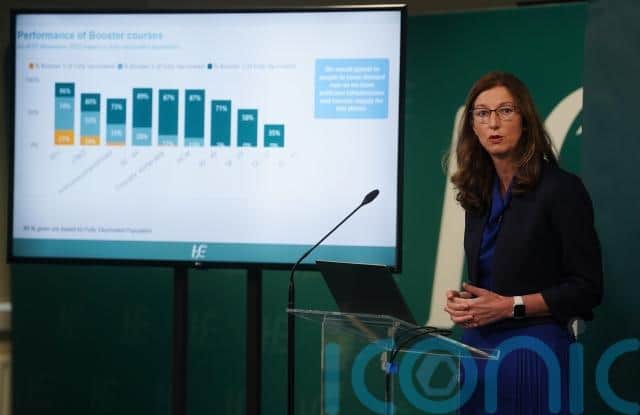
Eileen Whelan, the national lead of the HSE’s test, trace and vaccination programme, said Ireland had moved from a test and trace strategy to a surveillance strategy.
She said that the number of people self-referring for a PCR test is currently 2.2% of the number of people doing so last January.
“The recommendation is that if you have symptoms, if you’re over 55 and you’re fully boosted, you don’t need a PCR test. You’re advised to self isolate and to stay at home. If you’re under 55 and you’re fit and healthy, you also don’t need a PCR test.”
Ireland has a vaccination rate of 97%, and a first booster dose rate of 80% of the eligible population.
Ms Whelan said that 74% of over 65s had received their second booster, with just 13% of healthcare workers receiving their second booster to date.